Enter your assignment draft separated by a line and then the complete assignment after all revisions at the bottom of the page. Include word count for each in parenthesis beside the title.
For example
daft 1
Football is one of the most physically demanding sports, requiring strength, speed, and endurance while putting extreme stress on the body. From high-impact tackles to repetitive movements, football players often experience muscle strain, joint pain, and long-term injuries. Because of this, recovery and body care are essential for both current and future players. The purpose of this essay is to examine whether massage therapy, physical therapy, or a combination of both is more beneficial for football players over time, using insight from former players and research on long-term muscle and joint health.
Massage therapy focuses on relaxing tight muscles, improving circulation, and reducing stress in the body. Many former football players say that regular massage helped reduce soreness and allowed their bodies to recover faster between games or practices. Massage can also improve flexibility and decrease muscle stiffness, which is important for preventing injuries. However, while massage is excellent for relaxation and short-term relief, it does not always address deeper issues such as injured joints, torn ligaments, or limited movement caused by trauma.
Physical therapy, on the other hand, is designed to treat and strengthen injured areas of the body. Physical therapists create specific exercise plans to rebuild strength, restore movement, and prevent further injury. Many retired football players who suffer from knee problems, back pain, or shoulder damage often rely on physical therapy to help them regain mobility and function. Unlike massage, physical therapy targets the root of the injury and helps retrain the body to move properly again. This makes it extremely important for long-term recovery, especially after surgery or serious injury.
Although both therapies are helpful in different ways, research and player experience suggest that using both massage and physical therapy together can provide the most benefits. Massage therapy can help relax the body and reduce tension, making physical therapy exercises more effective. At the same time, physical therapy strengthens and heals the body, allowing athletes to perform better and avoid future damage. For young football players just starting out, learning the value of combining both treatments can lead to longer, healthier careers and a better quality of life after football.
In conclusion, while massage therapy provides comfort and muscle relief and physical therapy helps rebuild and strengthen the body, the most beneficial approach for football players over time is a combination of the two. By listening to the experiences of former players and following proper recovery practices, new athletes can protect their bodies, improve performance, and stay in the game longer.
genre 1 Presentation
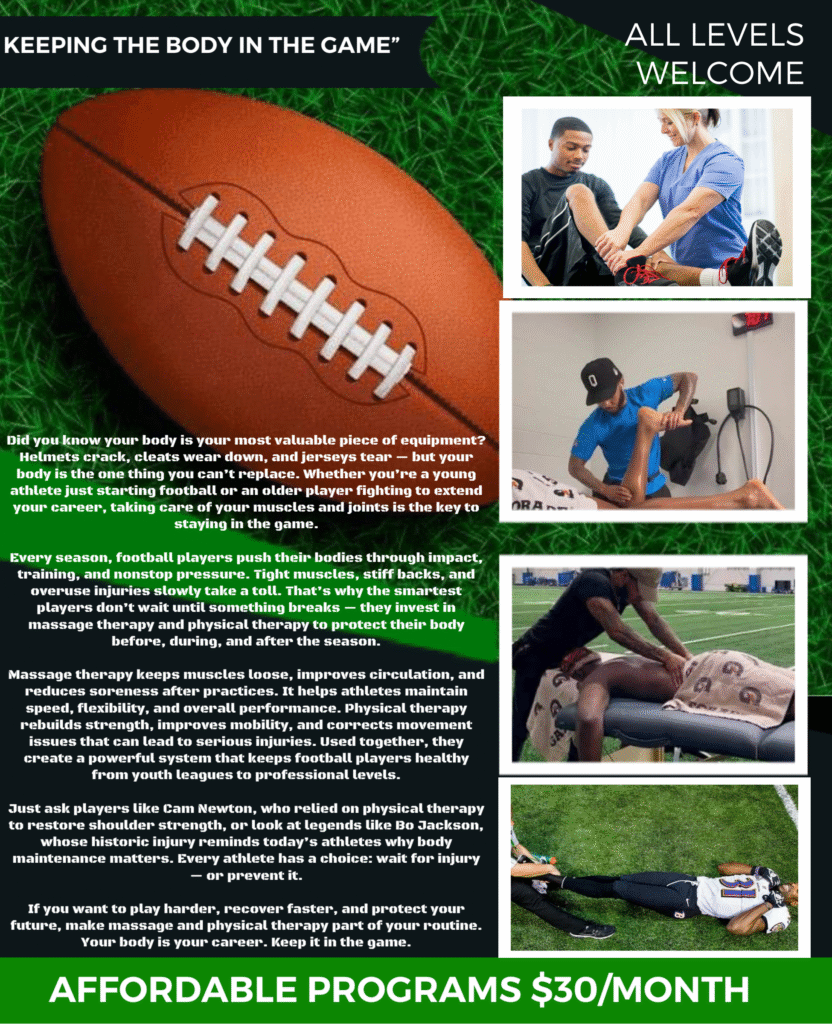
Keeping the Body in the Game: Massage Therapy vs. Physical Therapy for Football Players
Today’s presentation will focus on the differences between massage therapy and physical therapy and how each one can benefit football players at different stages in their careers. Whether a player is young and just starting out or older and dealing with years of wear and tear, both therapies play an important role in recovery and long term body health. My goal is to help us understand which option might be better for football players over time or whether using both together can lead to better results.
Football is a sport built on power, speed, and contact, which means every athlete from youth players to retired veterans carries the weight of long-term physical stress. My message for today is simple: your body is your real contract. You can have talent, training, and drive, but without taking care of your body, none of it lasts. This is true for new athletes entering the game and older athletes who have played for many years. In this presentation, I explore the differences between massage therapy and physical therapy and how both forms of care can help football players prevent injury, recover faster, and stay in the game longer.
A powerful example of how quickly a career can change is the 2017 spinal cord injury of Ryan Shazier, a linebacker for the Pittsburgh Steelers. The hit looked routine, but it left him temporarily paralyzed and ended his NFL career. His story reminds players that the body can only take so much impact before it breaks down. Even though Shazier’s injury was extreme, many players experience smaller but repeated injuries that build up over time. These include muscle strains, joint pain, back tightness, and overuse injuries problems both massage therapists and physical therapists are trained to treat.
The NFL also focuses on reducing injuries through better equipment and safety rules. Each year, NFL and BioCore engineering labs test helmets worn by players to determine which models provide the best protection. Since 2002, the NFL has updated its safety rules using computer simulations that help reconstruct injuries and understand how they happen. According to Sam Huddleston, principal data scientist at BioCore, these tools help identify what changes need to be made to reduce player risk. The NFL’s “digital athlete” program uses sports science, biomechanics, and injury data to help teams create individualized training and recovery plans, analyze real-time injury risk during games, and support safer equipment and coaching techniques.
Massage therapy focuses on muscles, soft tissue, circulation, and relaxation. For football players, this means loosening tight hamstrings, releasing knots in the back and shoulders, improving mobility, and reducing inflammation after practices or games. According to a study in the International Journal of Sports Physical Therapy, massage reduces muscle soreness and improves short-term flexibility, helping athletes maintain performance throughout a long season. Many NFL players rely on weekly or even daily massages because they help the body recover faster and prevent small problems from becoming major injuries.
Physical therapy, on the other hand, focuses on rehabilitation, strength-building, and long-term function. PT is used when a player has already been injured or is dealing with chronic pain. For example, when Cam Newton struggled with shoulder injuries that affected his throwing power, physical therapy helped him rebuild strength and range of motion. Newton’s recovery shows how PT helps athletes return to high-level performance by retraining the body and correcting underlying movement problems. PT also teaches players how to move safely, lift correctly, and avoid reinjury.
Another major example is Bo Jackson, one of the most legendary athletes in sports history. His 1991 hip injury ended his NFL career and nearly stopped his entire athletic life. At that time, sports medicine was not as advanced as it is today. Modern physical therapy, combined with targeted massage and recovery work, might have extended his playing career. His experience proves how important it is for athletes especially football players to take injury prevention seriously before something becomes permanent.
Sports injury research shows that football players face significant physical strain during the preseason, making recovery and injury-prevention strategies essential. One study reported that 17% of all injuries over two seasons occurred during the preseason, and players missed an average of 22.3 days per injury. Younger players (ages 17–25) were significantly more likely to get injured than older, more experienced players. The most common injuries involved the thigh (23%), knee (17%), ankle (17%), and lower leg (15%). Overuse and tendon-related injuries were more frequent in the preseason, with Achilles tendonitis accounting for 33% of Achilles injuries and muscle strains making up 37% of all preseason injuries. Because these injuries often involve soft tissue, overuse, and mobility limitations, this evidence supports the idea that both physical therapy and massage therapy play important roles in helping football players recover, prevent reinjury, and stay healthy throughout the season.
While massage therapy and physical therapy share the goal of helping athletes stay healthy, they work in very different ways. Massage therapy is best for immediate muscle relief it reduces tightness, improves circulation, lowers inflammation, and helps players feel physically and mentally recovered after practices and games. It focuses on soft tissue and short-term recovery. Physical therapy, however, targets long term healing and performance. PT helps rebuild strength after injuries, improves joint stability, corrects movement patterns, and prevents chronic problems from returning. Football players benefit most when the two are combined: massage keeps the body loose and ready for performance, while physical therapy ensures the body stays strong, balanced, and protected from serious injury.
Injury prevention through physical therapy involves identifying weaknesses, improving biomechanics, and correcting imbalances through customized plans that include strength training, flexibility work, and balance exercises. This includes preseason screenings, proper warm-ups and cool-downs, and sport-specific exercise routines.
Injury prevention through massage focuses on maintaining muscle balance and flexibility, reducing the risk of strains and other common football injuries. Many athletes use massage therapy as an essential part of their training and recovery routines to optimize muscle function, prevent injury, and support both physical and mental recovery.
Massage also provides psychological benefits. Many athletes report reduced fatigue, anxiety, depression, and stress after treatment. Feeling better mentally often leads to better performance physically.
Research also shows that massage can help reduce delayed onset muscle soreness (DOMS). While the improvements are small, they are statistically significant, and massage can provide immediate pain relief after intense exercise. The benefits also depend on the type of massage deep tissue and pressure-focused methods used consistently over several weeks show the greatest impact on recovery and strength.
To conclude, taking care of your body is not optional in football it is a key part of staying “in the game.” Massage therapy and physical therapy both offer tools that keep athletes strong, flexible, and ready for competition. By learning from cases like Ryan Shazier, Cam Newton, and Bo Jackson, today’s players can understand the importance of protecting their bodies before it’s too late. Prevention is power. Recovery is strategy. And keeping your body in the game should always be your top priority.
Work cites
Woods, C ; Hawkins, R ; Hulse, M ; Hodson, A
British journal of sports medicine, 2002-12, Vol.36 (6), p.436-441
Cavanaugh, Mark T., et al. “The Effects of Massage Therapy on Flexibility and Delayed Onset Muscle Soreness.” International Journal of Sports Physical Therapy, vol. 12, no. 7, 2017, pp. 115–125.
ESPN News Services. “Ryan Shazier’s Road to Recovery After Spinal Injury.” ESPN, 2020.
Schilken, Chuck. “Cam Newton’s Shoulder Injury Timeline and Recovery.” Los Angeles Times, 2019.
Draft 1 (500 words)
______________________________
genre 2
Draft 2 No changes made
genre 1
Supporting documents like research notes, brainstorms, etc. (images are welcome)
______________________________
______________________________
Complete assignment (750 words)
genre 1
genre 2

This entry is licensed under a Creative Commons Attribution-NonCommercial-ShareAlike 4.0 International license.

