Enter your assignment draft separated by a line and then the complete assignment after all revisions at the bottom of the page. Include word count for each in parenthesis beside the title.
For example
Draft 2
____Shanice Smith
Prof.McDonald
ENG 11O
October 20,2025
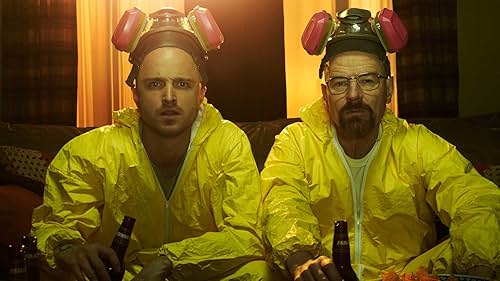
Rhetorical Analysis Essay: Breaking Bad
In the television series Breaking Bad (2008–2013), creator Vince Gilligan uses a combination of visual rhetoric, character development, and tone to persuade the audience to understand the moral transformation of the protagonist, Walter White. Through careful use of symbolism, cinematography, and emotionally charged dialogue, the show encourages viewers to question how far an ordinary person might go when confronted with desperation, illness, and financial pressure. Gilligan’s rhetorical strategies invite the audience not only to observe Walter’s choices, but to empathize with the circumstances that drive him to become “Heisenberg.”
Gilligan’s purpose is to show how power and fear can reshape a person, turning them from a struggling family man into a morally conflicted criminal. This purpose is reflected in one of the show’s most iconic scenes: Walter’s speech in Season 4 when he declares, “I am the one who knocks.” The line illustrates Gilligan’s strategic use of ethos and pathos. First, Gilligan establishes Walter’s ethos by showing him as a once-brilliant chemist whose life has been defined by missed opportunities. His quiet frustration and financial struggles create credibility Walter becomes relatable to viewers who understand stress, debt, or feeling overlooked. At the same time, the emotional intensity of the “I am the one who knocks” speech uses pathos to evoke fear, uneasiness, and sympathy. Viewers see both the strength Walter is gaining and the danger he is becoming.
Gilligan also uses visual rhetoric particularly color symbolism and camera angles to reinforce his message. Walter’s transformation is represented by his wardrobe shifting from light colors to darker tones, illustrating his moral decay. Frequent low-angle shots make Walter seem more powerful as the show progresses, persuading the audience to recognize his growing dominance. These visual choices form a rhetorical strategy that communicates character development without the need for explicit dialogue.
Additionally, the show relies on logos through the scientific accuracy of Walter’s methods and the logical explanations behind his decisions. The step-by-step problem solving in scenes where Walter uses chemistry to escape danger gives the narrative a logical appeal. This use of logos persuades the audience that Walter’s actions though illegal follow a rational system shaped by his expertise and survival instinct.
The genre of the show a dramatic crime series also helps Gilligan reach his intended audience: viewers who enjoy complex character studies and moral dilemmas. By blending action with psychological depth, the series encourages viewers to reflect on themes such as family loyalty, corruption, pride, and the cost of ambition. The show’s realistic tone and slow build of tension make the audience feel personally invested in Walter’s choices, further strengthening Gilligan’s rhetorical impact.
In conclusion, Vince Gilligan uses a range of rhetorical strategies in Breaking Bad, including ethos, pathos, logos, symbolism, and tone, to convey Walter White’s transformation from an underpaid chemistry teacher into a feared figure in the criminal world. Through visual storytelling and emotionally charged scenes, Gilligan persuades the audience to consider how ordinary circumstances can push someone into extraordinary and dangerous territory. The combination of character depth, persuasive techniques, and narrative structure makes Breaking Bad a powerful study in human motivation and the consequences of moral compromise.
______________________________
Draft 1 (600 words)
Walter White from Breaking Bad is one of the most morally complex characters in modern television. At the beginning of the series, Walt is a quiet, underpaid high-school chemistry teacher who is diagnosed with terminal lung cancer. Faced with financial pressure and a fear of leaving his family with nothing, he decides to cook methamphetamine with a former student, Jesse Pinkman. One scene that stood out to me occurs in Season 2, when Walt witnesses Jane overdosing and chooses not to intervene. This moment shocked me because it revealed how far he had drifted from his original justification of “doing this for the family.” It was a turning point that showed Walt crossing a moral line he could never take back. His ability to rationalize such a harmful choice is part of what makes him both intriguing and disturbing.
Walt’s behavior can be understood through both situational and dispositional explanations. At first, the situational pressures in his life were overwhelming: a terminal diagnosis, crushing medical bills, and a sense that he failed to provide for his wife and children. He felt powerless working two low-paying jobs despite being extremely intelligent. These external forces pushed him toward desperate actions. However, as the series continues, it becomes clear that Walt’s personality traits his pride, his desire for recognition, and his need for control also play a major role. These dispositional characteristics were always present, but cooking meth allowed them to grow. For example, Walt becomes increasingly aggressive whenever someone questions or threatens his authority, something that cannot be explained by situational factors alone. By the later seasons, the internal traits clearly outweigh the external pressures. The show suggests that both forces interact, but his dispositional traits eventually drive him toward becoming Heisenberg.
One attribution bias that helps explain how we judge Walt is the actor observer bias. This bias describes how people tend to explain their own harmful behavior based on situational factors while judging others more harshly based on personal traits. Walt constantly excuses his own choices by claiming he is doing everything “for his family,” even when his actions put them in danger. He sees himself as a victim of circumstance. However, he rarely applies the same empathy to others. For example, he criticizes Jesse for being irresponsible or emotional, even though Jesse is also reacting to stressful and traumatic situations. As viewers, we sometimes fall into the same bias either blaming Walt entirely as a “bad person” or excusing him too much because we see the pressures he was under. Recognizing this bias helps us understand how our judgment might shift if we consider his context more carefully.
Several additional social psychology concepts also help explain Walt’s transformation. The first is cognitive dissonance, the mental tension that occurs when a person’s actions contradict their beliefs or self-image. Walt sees himself as a good, hardworking man, but he is committing violent and illegal acts. To reduce this dissonance, he constantly rationalizes what he does. His phrase “I’m doing this for my family” becomes a psychological shield that allows him to continue harming others without feeling like a bad person. However, as his power grows, his justifications start collapsing, and the audience realizes his motives have shifted from protecting his family to feeding his ego.
Another concept is social roles. When Walt steps into the role of a meth manufacturer, he begins adopting behaviors he never would have considered as a teacher. The “Heisenberg” persona gives him a sense of confidence, dominance, and danger. The role becomes so powerful that he starts behaving according to the expectations of a drug kingpin, even when he is at home. This illustrates how adopting a new role can drastically change a person’s identity and actions.
A third relevant concept is obedience. At the start of his criminal involvement, Walt often obeys dangerous authority figures like Tuco and Gus out of fear. He follows their orders because the consequences of disobedience could be life-threatening. This shows how obedience to authority can lead people to participate in harmful behavior, especially when they believe they have no choice. Over time, Walt moves from obeying others to becoming the authority himself, which is another sign of his transformation.
Analyzing Walter White through these social psychology concepts changed how I feel about him. Before breaking down his behavior, I saw him mostly as a villain who allowed greed and power to corrupt him. While I still believe he becomes responsible for terrible acts, understanding the situational pressures he faced and how cognitive dissonance shaped his decision-making made me see his transformation as more gradual and complex. I sympathize less with him as the show progresses, but I also understand how ordinary frustrations like feeling overlooked, powerless, and financially trapped can contribute to someone losing their moral compass. Learning about attribution bias also made me aware of how easy it is to judge characters without considering context. Overall, applying these psychology concepts helped me see Walter White not just as a criminal, but as a deeply flawed human shaped by a mix of circumstances and internal traits.
Complete assignment (750 words)
Breaking Bad, created by Vince Gilligan, is a television series that follows the life of Walter White, a high school chemistry teacher who is diagnosed with cancer and turns to making drugs to support his family. As the series progresses, Walter changes from a quiet, struggling man into a powerful and dangerous drug lord known as “Heisenberg.” Gilligan uses rhetorical strategies such as pathos, ethos, and logos to show Walter’s psychological transformation and to influence how the audience views his choices. Through Walter’s actions, the show demonstrates how fear, pride, and the desire for control can completely change a person’s identity.
At the beginning of the series, Walter White is shown as a man who feels powerless. He is underpaid, disrespected by his students, and forced to work a second job to support his family. His cancer diagnosis adds to his feeling of helplessness and fear. From a psychological perspective, Walter experiences an identity crisis. He feels as though he has no control over his life, and this damages his self-esteem. His ego and pride begin to take over as he searches for a way to feel important again. By choosing to enter the drug business, Walter creates a new version of himself Heisenberg someone who is confident, feared, and in control. This transformation shows how the human mind can change when it is fueled by insecurity, fear, and the need for power.
Gilligan uses pathos to make the audience feel sympathy for Walter in the early stages of the show. Viewers see him as a sick man trying to provide for his family before he dies. His love for his wife and children, his medical bills, and his fear of leaving them with nothing make the audience feel sorry for him. These emotional moments cause viewers to justify his bad decisions at first, even though what he is doing is illegal and harmful. By using emotional appeal, the show pulls the audience into supporting Walter even as he begins to cross moral lines.
The show also uses ethos and logos to make Walter seem trustworthy and logical. Ethos is built through Walter’s role as a chemistry teacher. Because he is educated and intelligent, the audience believes he understands what he is doing. Logos is shown through his careful planning and reasoning. Walter often explains his actions using logic, such as needing money for his family or avoiding danger from others. These logical explanations make his choices seem reasonable, even when they are violent and selfish. Over time, however, the audience begins to see that Walter is no longer doing this for his family he is doing it for himself and his hunger for power.
In conclusion, Breaking Bad powerfully shows how a normal person can become corrupted by fear, pride, and control. Through rhetorical strategies such as pathos, ethos, and logos, the audience is emotionally and mentally guided through Walter White’s psychological transformation. The series teaches an important lesson: when a person becomes obsessed with power and ego, they can lose their true identity and destroy not only themselves, but everyone around them.
______________________________

This entry is licensed under a Creative Commons Attribution-NonCommercial-ShareAlike 4.0 International license.

